
Storytelling: We Don't Need New Stories. We Need to Rethink the Way We Tell Them.

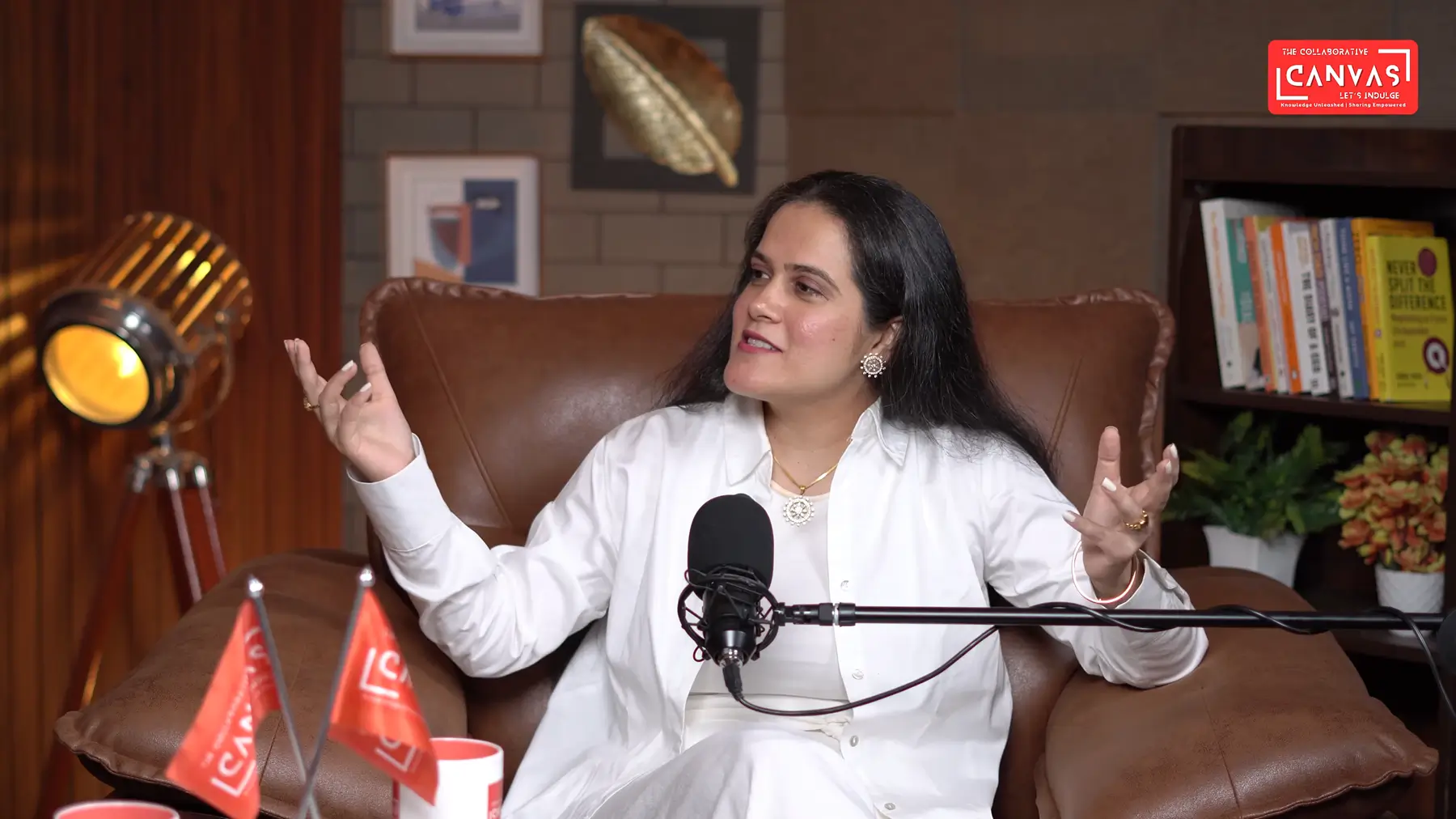
I have often wondered whether we, as storytellers, truly understand the generation we are creating stories for. We speak about changing audiences, shrinking attention spans, digital disruption, and the influence of social media. We discuss formats, platforms, algorithms, and the business of keeping people engaged. But I feel we may be missing a much more fundamental shift.
The world has changed the way people experience reality, yet we continue to tell stories as though reality were a single, universally understood experience.
This, to me, is the real crisis—and the opportunity—of contemporary storytelling.
The new generation is not simply consuming more content than previous generations. It is growing up exposed to fundamentally different versions of life. A teenager in Mumbai can encounter the worldview of someone in New York, the struggles of a family in Gaza, the aspirations of a creator in Seoul, and the intimate confessions of a stranger online, all within a few minutes. These experiences may be distant, contradictory, curated, or incomplete, but together they influence how young people understand themselves and the world around them.
Their reality is no longer shaped exclusively by their immediate surroundings. It is assembled from countless fragments of other people's realities.
As a filmmaker, I find this both fascinating and unsettling. It forces me to ask: when we tell a story today, whose reality are we representing, and whose reality are we leaving out?
The Problem with Assuming We Know Our Audience
I believe one of the biggest mistakes storytellers can make is assuming that they understand an audience simply because they belong to the same generation, culture, or society.
We often speak about audiences as though they are predictable categories. We say young people want faster narratives, more relatable characters, or stories that reflect their aspirations. We reduce complex human beings to demographic profiles and consumption patterns.
But a generation is not a single personality.
Two young people of the same age may have radically different understandings of love, ambition, family, morality, and freedom. One may be shaped by tradition, another by rebellion. One may find security in belonging, while another may experience that same belonging as a restriction.
If we continue to create characters based on assumptions rather than observation, we risk producing stories that look contemporary but think conventionally.
My position is simple: the storyteller's first responsibility is not to understand the market. It is to understand the human being.
Research can tell us what people watch. Data can tell us when they stop watching. Neither can fully explain why a character's silence breaks our heart, why an uncomfortable truth stays with us, or why we recognise ourselves in someone whose life is entirely different from our own.
That understanding requires something algorithms cannot automatically provide: curiosity about human complexity.
We Have Become Comfortable with Exposure, but Not Necessarily with Understanding
There is another contradiction that troubles me.
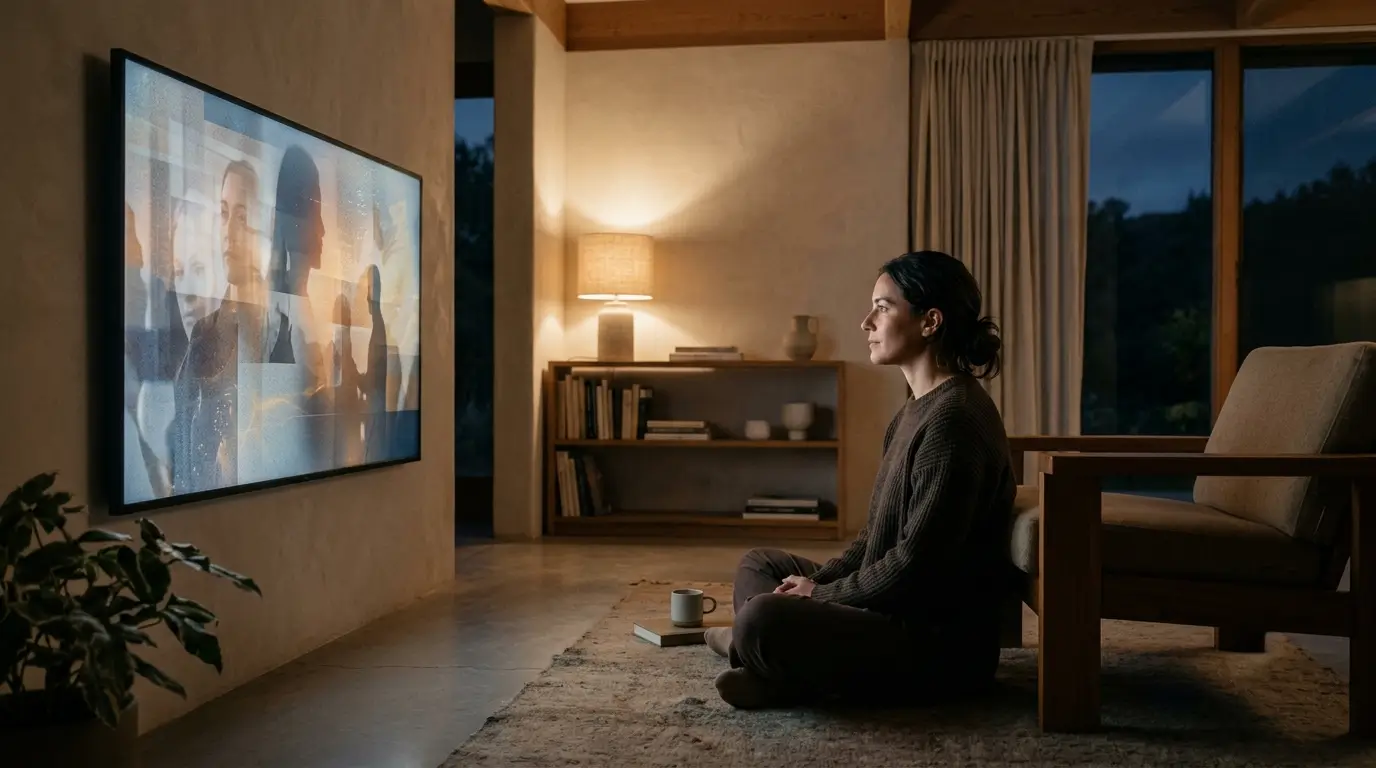
We have access to more human stories than at any point in history, yet we often seem increasingly impatient with perspectives that challenge our own. We can witness another person's suffering on a screen and scroll past it moments later. We can encounter an unfamiliar culture and form an opinion before making the effort to understand its context.
Exposure creates awareness, but awareness does not automatically produce empathy.
In some ways, the abundance of content has made the act of paying attention more difficult. We are surrounded by stories, but how many are we truly willing to sit with?
This is where I believe storytelling must resist the temptation to become merely consumable.
I do not believe every film must carry a social message, every character must represent a cause, or every narrative must offer a profound philosophical conclusion. Entertainment has its own value. Escapism, laughter, suspense, and wonder are legitimate human needs.
But even entertainment can deepen our understanding of ourselves.
A well-told story can make us uncomfortable without humiliating us, challenge our beliefs without preaching to us, and introduce us to another person's reality without demanding that we immediately agree with it.
I would rather create a story that leaves an audience questioning its assumptions than one that simply confirms what the audience already believes.
I Am Less Interested in Perfect Heroes Than in Honest Contradictions
Traditional storytelling has often depended on clearly defined moral positions. Heroes stand for something; villains threaten it. Conflicts build towards a resolution, and audiences leave with a sense of emotional or moral closure.
There is nothing inherently wrong with this structure. Some of the most enduring stories in the world depend on it.
But I believe we should be more willing to explore the contradictions that define actual human behaviour.
Why does a loving parent sometimes become controlling? Why does a person fighting for freedom sometimes deny freedom to someone else? Why can someone be generous in public yet cruel in private? Why do people who believe they are doing the right thing cause genuine harm?
These are not merely interesting character questions. They are questions about how human beings rationalise their behaviour.
I am interested in characters who cannot be understood through a single adjective. Not because ambiguity is fashionable, but because contradiction is often where the truth resides.
To understand a character is not to excuse them. To humanise someone is not to absolve them of responsibility. In fact, the more deeply we understand the forces behind a person's choices, the more meaningfully we can examine those choices.
I believe the next evolution of storytelling lies in replacing simplistic judgement with deeper investigation—not in abandoning morality, but in understanding how complicated moral decisions can be.
We Need a New Grammar, Not Just New Formats
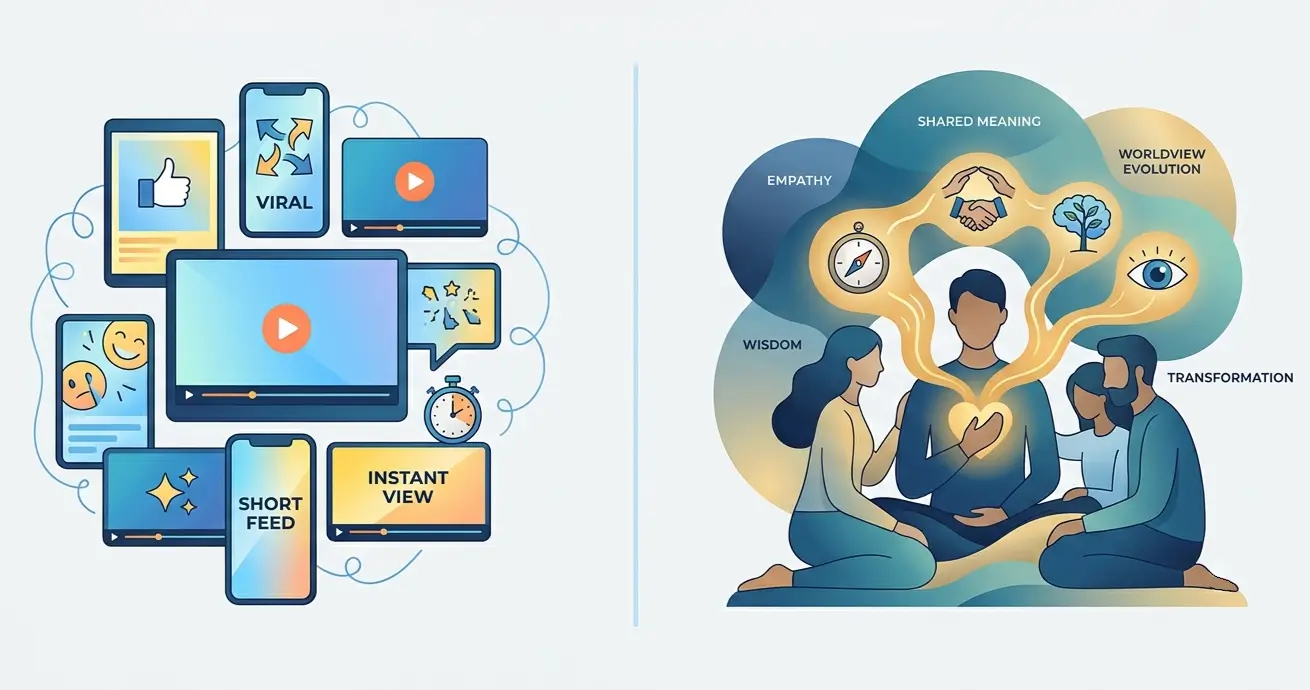
Whenever storytelling evolves, we tend to focus on its visible changes: shorter videos, interactive narratives, unconventional timelines, immersive experiences, and new technologies.
These developments matter, but I do not think they represent the heart of the transformation.
A story can use the latest technology and still carry an outdated worldview. It can have a diverse cast and still reduce its characters to stereotypes. It can be nonlinear and experimental while offering nothing new in its understanding of human beings.
For me, a new grammar of storytelling begins with the questions we are willing to ask.
Can we allow two opposing perspectives to coexist without rushing to declare one entirely right and the other entirely wrong? Can we portray a character's transformation without pretending that personal growth is always neat or complete? Can we acknowledge that some conflicts have no satisfying resolution, even though the people living through them must continue?
And can we trust our audiences enough to leave some questions unanswered?
I am not advocating confusion for its own sake. I am advocating honesty about the complexity of life.
The most meaningful innovation may not be a new narrative technique. It may be the courage to tell an old human story without relying on familiar assumptions about how people ought to behave, feel, or change.
The Storyteller Must Also Be Willing to Change
Perhaps the most uncomfortable part of this argument is that it places the responsibility on us, the storytellers.
It is easy to say that audiences have changed. It is harder to question whether our own perspectives have become limited by habit, nostalgia, commercial expectations, or the success of stories we told in the past.
We may be tempted to interpret the new generation through the values that shaped us. We may mistake unfamiliar behaviour for superficiality, changing relationships for declining commitment, or new forms of expression for a lack of depth.
Sometimes those concerns may be justified. Sometimes they may reveal more about our discomfort with change than about the generation itself.
I believe storytellers must remain students of human behaviour. We must listen without immediately judging, observe without rushing to categorise, and question our own convictions as rigorously as we question those of our characters.
This does not mean surrendering our point of view. Quite the opposite. A strong point of view becomes more valuable when it is informed by genuine engagement with perspectives beyond our own.
The storyteller should not pretend to be neutral. Every story reflects choices about what deserves attention, whose voice matters, and which truths are brought into focus. The responsibility is to make those choices consciously.
What I Believe the Future of Storytelling Demands
I do not believe the new generation needs to be taught a completely new way of telling stories. Nor do I believe the fundamentals of storytelling have become obsolete.
Human beings still crave connection, meaning, conflict, discovery, and emotional release. We still want to see our struggles reflected in someone else's journey. We still need stories that help us imagine possibilities beyond our immediate lives.
What has changed is the complexity of the world against which those stories are experienced.
The storyteller can no longer assume that a single cultural reference, moral framework, or definition of success will resonate universally. We must recognise that audiences arrive with different histories, influences, insecurities, and interpretations.
This demands greater sensitivity, but also greater courage: the courage to move beyond formula, to question inherited assumptions, and to portray people as they are rather than as our narratives require them to be.
As a filmmaker, I want to create stories that entertain, but I also want them to enlarge the audience's understanding of human experience. I want people to leave a film with something more than an opinion about whether a character was right or wrong. I want them to leave with a question they had not considered before.
That, to me, is the difference between a story that merely occupies our attention and one that changes the way we see.
My conviction is this: the future of storytelling will not be determined by how quickly we adapt to new platforms, but by how honestly we confront the complexity of the human beings on those platforms.
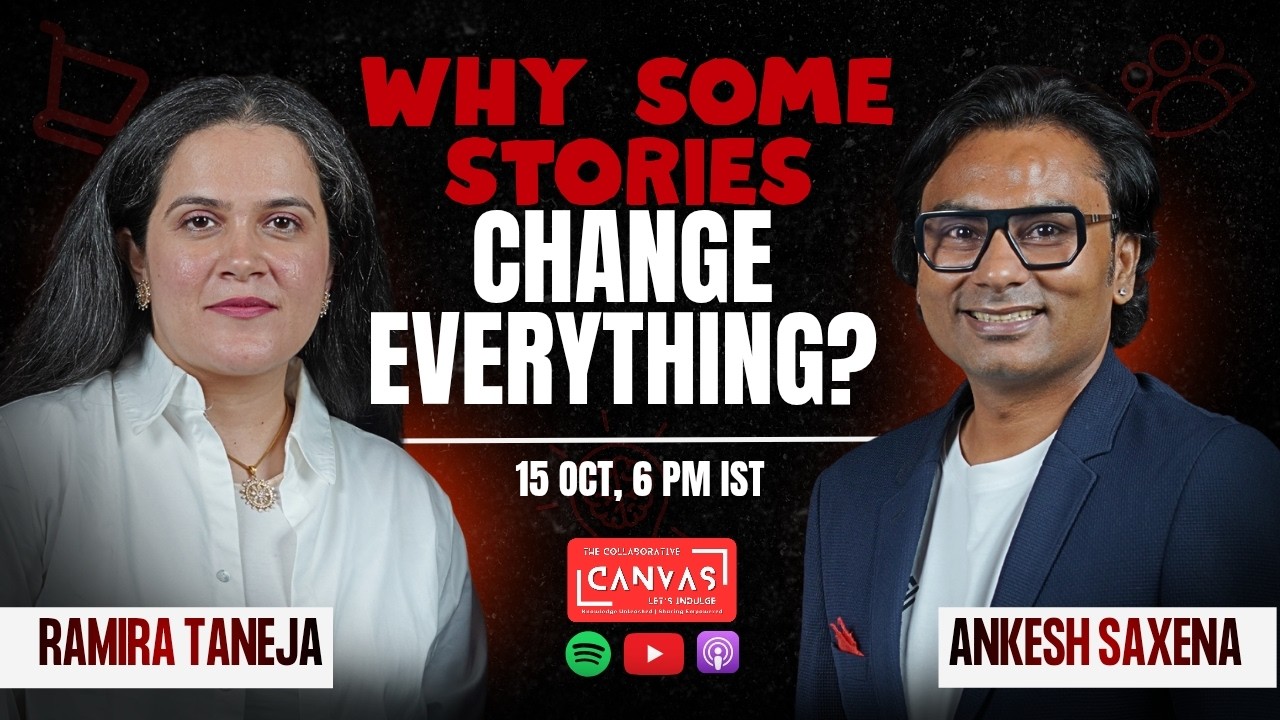
Watch the Full Podcast here:
The Conclusion
We do not necessarily need a new kind of story. We need storytellers who are willing to see differently, think more deeply, and challenge the comfort of their own conclusions.
Because when the world offers us a thousand competing versions of reality, the storyteller's task is not to manufacture one more version and insist that it is the truth.
It is to help us recognise the human truths that remain invisible when we are convinced that our own version is the only one that matters.