
10 Essential Leadership Qualities: What Makes a Great Leader?

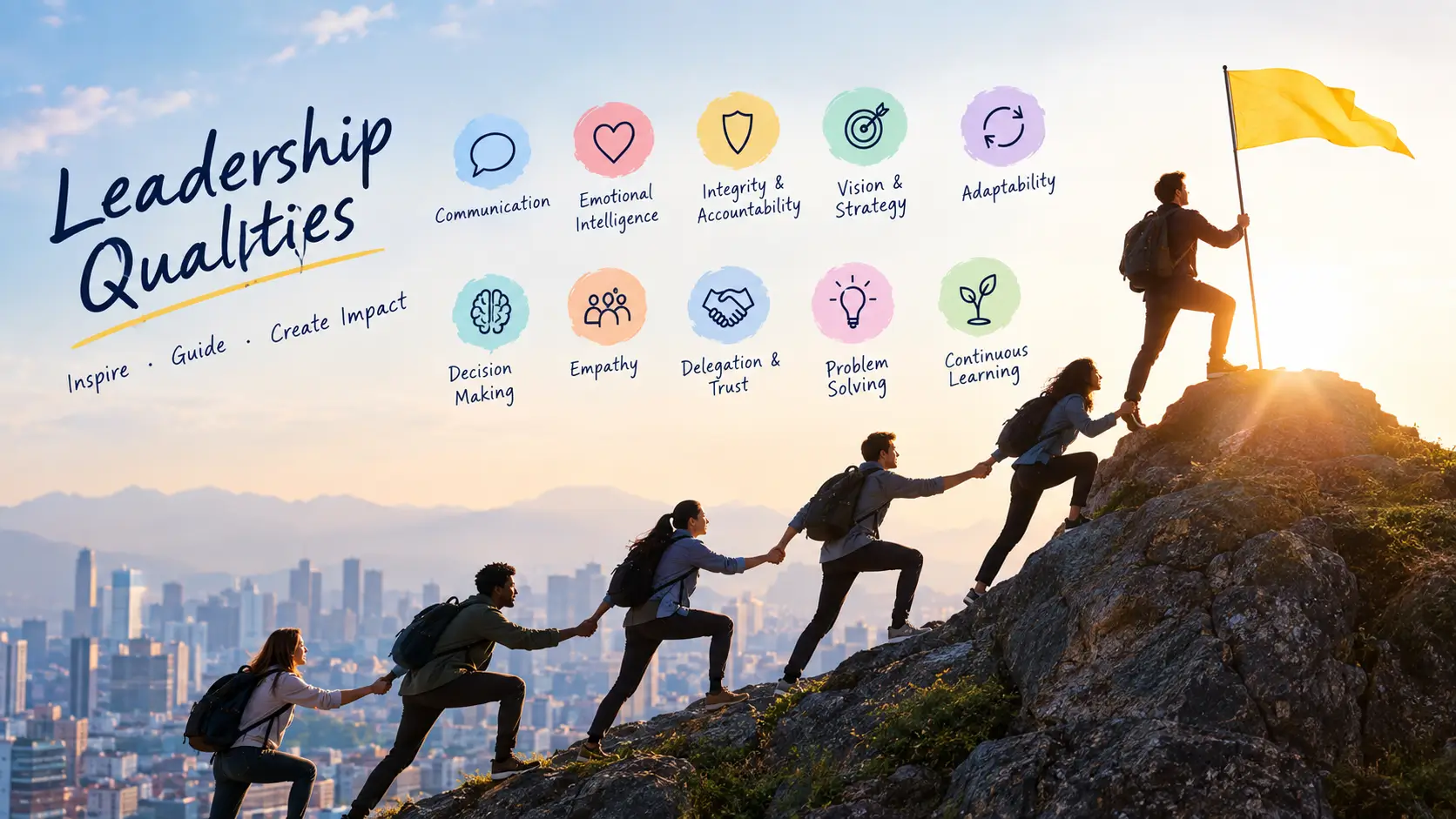
Every organization, team, or community eventually asks the same question: what actually separates someone who manages people from someone who truly leads them? It typically boils down to leadership skills that shape how a person thinks, communicates, and makes decisions under pressure. Some people possess these qualities from birth, whereas most of us acquire them through years of effort, learning from mistakes, and hard work. Whether are we running a startup, are part of a large company, or simply wish to improve yourself, understanding leadership qualities can significantly enhance how we interact with others.
In this article, we will explore the qualities of a great leader, what sets them apart from good leadership, and action steps you can take to develop these qualities.
What Are Leadership Qualities?
Leadership qualities are the personal attributes, practices, and talents that allow someone to inspire, motivate, and influence others to achieve a common purpose. They're not simply about issuing orders or having a title; they're about earning trust, inspiring confidence, and making decisions that benefit the team.
Emotional awareness is a common trait of good leadership, as is an understanding of strategy, numbers, or operations. A leader must also know people as much as they know how to use strategy or numbers or run operations. This includes both how leaders handle crises and how they celebrate team victories. The first step in developing your leadership skills is to understand what they entail in practice!
10 Essential Leadership Qualities Every Great Leader Should Have
Great leadership is a combination of habits and qualities. Here area some of the quality a great leader incorporate - qualities that inspire followers to want to follow them.
1. Communication
Effective communication serves as the foundation for most other characteristics of a successful leader. A leader who cannot share his vision, provide feedback, or listen attentively will struggle to build trust, no matter how talented they are otherwise. Strong communicators adjust their tone and message to the audience, whether that's a boardroom presentation or a private meeting with a struggling employee.
2. Emotional Intelligence
Emotional intelligence (EI) is a skill that enables people to identify, comprehend, and regulate their own emotions and the emotions of others. Leaders with high emotional intelligence manage conflict, remain attuned to their surroundings, and respond rationally under stress. This single trait often separates leaders whom people respect from leaders whom people merely tolerate.
3. Integrity & Accountability
Integrity is behaving properly when no one is looking and accountability is taking responsibility for your errors rather than passing them off. These two traits are essential for a successful leader, as they build genuine trust rather than superficial or rushed trust. Teams quickly notice when their leader holds themselves to the same standards they expect from others, and it changes how hard people are willing to work for them.
4. Vision & Strategic Thinking
If your leader has no vision, he is just managing daily chaos. The best leaders step back, look at the big picture, draw a blueprint for the team or company to follow, see where they want it to go, and then put that plan into action. Another aspect of strategic thinking is looking for problems before they become problems.
5. Adaptability
Markets change, teams change, and unforeseen problems pop up. Leaders who resist change will fall behind, while those who embrace it will thrive. This agility is one of the most understated attributes of a top-notch leader, particularly in the fast-paced business world.
6. Decision-Making
Making tough decisions under real-time pressure and with incomplete information is often the hallmark of effective leadership. Strong decision-makers seek input, weigh pros and cons, and move forward, avoiding analysis paralysis. Even when a decision doesn't yield the desired outcome, a leader's readiness to make choices and accept responsibility fosters long-term credibility.
7. Empathy
Empathy means a leader genuinely understands what their team members are going through, not just professionally but also personally. It manifests in small gestures: after a long week, when someone is clearly burning out, or when they simply need to be heard without immediate solutions. Empathetic leaders build loyalty that no salary increase can replicate.
8. Delegation & Trust
A leader cannot do everything himself, and such a strategy is one of the best ways to ruin a team and himself. The key to effective delegation is identifying the most qualified person for the task and leaving the urge to oversee their work. This quality also conveys respect, which encourages people to take on the responsibilities assigned to them.
9. Problem-Solving
All leadership positions come with a steady stream of problems, ranging from logistical issues to big crises. Great leaders are rational, think carefully, and respond rather than react. Effective problem-solving means engaging the right people early in the process and not attempting to solve all the problems by yourself in a back room.
10. Continuous Learning
A successful leader never thinks they have grasped leadership to its full extent. They are curious, open-minded, read widely, and are receptive to criticism from those younger than them. In fact, one of the most obvious leadership traits that keep a person relevant and effective in a changing industry and team is his or her mindset of continuous learning.
These ten leadership characteristics form the foundation of effective leadership for individuals, whether they are leading five people or five hundred.
Qualities of a Good Leader vs. a Great Leader
It's worth differentiating between good leaders and great leaders because the difference isn't as vast as it appears, but it does make a difference. A good leader is competent and reliable and achieves results. Achieving targets, maintaining reasonable communication, and ensuring the team accomplishes things are all essential aspects of effective leadership. A great leader accomplishes these tasks and inspires people to aspire to more than just the company's success. The qualities of successful leaders usually include a genuine investment in developing others, not just extracting performance from them. Great leaders build people and systems that go beyond their tenure, and good leaders manage the present.
The difference between a solid manager and a leader who is remembered for the rest of their career often lies in their ability to create something greater than themselves.
Leadership Qualities for Entrepreneurs
Owning a business adds an extra layer of challenge to leadership, as entrepreneurs often have to juggle multiple roles and motivate a team towards a vision that is still in development. In this high-stakes world, some leadership traits are more important than others.
- Decision-making: Entrepreneurs usually don't have complete information, and making prompt and confident decisions is crucial. Waiting for perfect clarity often means missing the window of opportunity altogether.
- Risk-taking: Leaders who have difficulty dealing with uncertainty frequently encounter early challenges, as entrepreneurship necessitates taking calculated risks. The key is weighing potential losses against potential gains rather than avoiding risk altogether.
- Resilience: In the startup world, failures are common, and those who survive are the ones who demonstrate resilience. Bouncing back quickly after a setback often matters more than avoiding setbacks in the first place.
- Team building: Early hires often define company culture; the ability to attract and retain the right people is a make-or-break skill. A strong founding team can compensate for gaps in the founder's own expertise.
- Vision and adaptability: Entrepreneurs must inspire belief and pivot when things go wrong. Holding onto the core mission while staying flexible on the path to get there keeps the team aligned even through change.
For founders and business owners, these leadership qualities often develop faster out of necessity than they would in a traditional corporate ladder, simply because the stakes are so immediate and personal.
How to Develop Good Leadership Qualities
The good news is that leadership skills aren't natural endowments of a few lucky people; they can be consciously developed over time.
- Seek feedback: Ask team members, mentors, and peers how you're doing and take it in, rather than getting defensive.
- Improve communication: Learn to clarify your ideas and make sure people understand your message, not just what you said.
- Practice active listening: Put away distractions during conversations and focus on understanding rather than formulating your next response.
- Learn from mistakes: Embrace failure as data, rather than a personal verdict, and adjust your approach based on what actually happened.
- Build leadership skills consistently: Read, attend courses, become a mentor, and continually stretch out of your comfort zone.
Becoming a successful leader isn't a one-time event; it's a habit compounding over months and years.
Conclusion
Leadership isn't a position, a corner office, a title, or experience; it is how you behave toward others day after day. Each of the traits we explored contributes to making someone a person whom others will follow: communication, emotional intelligence, resilience, and continuous learning, among others. Being a good leader is possible, and anyone can achieve it - whether you are an experienced executive, a first-time manager, or an entrepreneur starting from scratch, provided you make the effort. Leadership is not a one-time act; it is an ongoing process that must be practiced repeatedly with as many people as you must lead.
Related perspectives
-
Global Branding: Strategies, Challenges & Lessons from Priya Tyagi
Ankesh Saxena
-
Types of Entrepreneurships: 10+ Types Explained with Examples
Ankesh Saxena
-
Why Culture Can’t Be Left to Chance
Ankesh Saxena