
The Risks of AI: Key Challenges, Concerns & Limitations

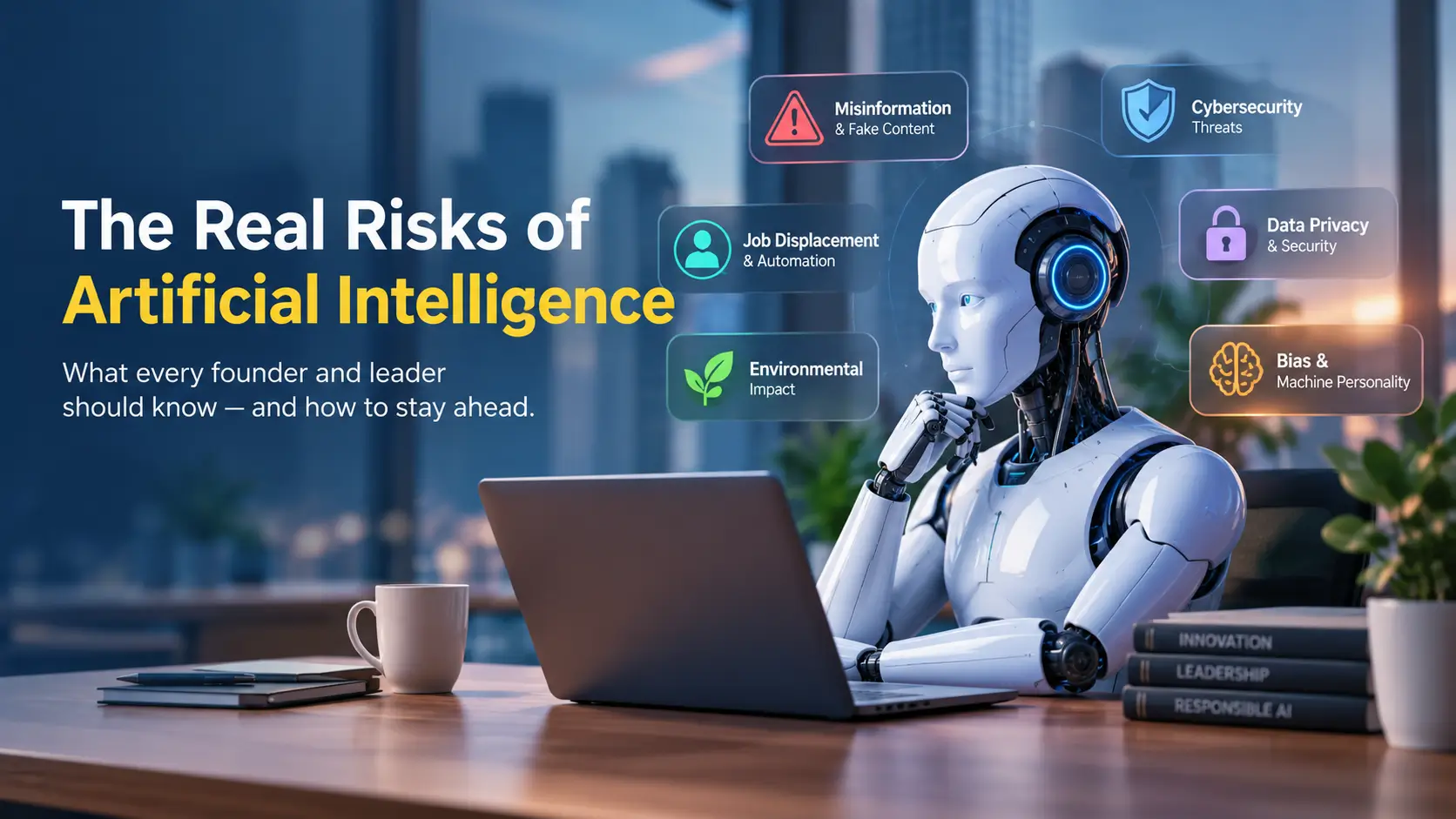
Think about a wonderful Monday. You ask your AI assistant for a market analysis; in 30 seconds, you get a well-drafted report with clean charts, conclusive insights, and a set of three statistics you can't wait to add to your investor deck.
You've discovered by Friday that one of those statistics is non-existent.
AI writes our emails, suggests our next binge-watch, and now has a seat at the boardroom. It's like magic until it tells you something is wrong, nicely. The goal of comprehending the risks of AI is not to run in panic. It is to lead smarter. The founders and leaders we speak with at The Collaborative Canvas bring this up constantly: innovation moves fast and responsibility has to keep pace. Let's examine a week in the life of business leaders, what can go wrong and how to fix it.
What Is Artificial Intelligence?
Before the trouble begins, one simple question arises: What is AI? There are many definitions of artificial intelligence; one of the most common is that AI is software that learns from a vast amount of data and makes predictions, generates content, or makes decisions based on that learning. Think chatbots, fraud prevention, image creation, and your phone's suggestions.
Here's the catch. AI doesn't know anything like you do. It predicts. That gap is the root of all AI challenges and limitations and makes the dangers of AI seem less like a movie villain's robot and more like a business headache.
5 Major Risks of AI You Should Know About
Over one week, a founder could run into all five. Some hit your inbox. Others hit your wallet.
Misinformation, Deepfakes, and Fake Content
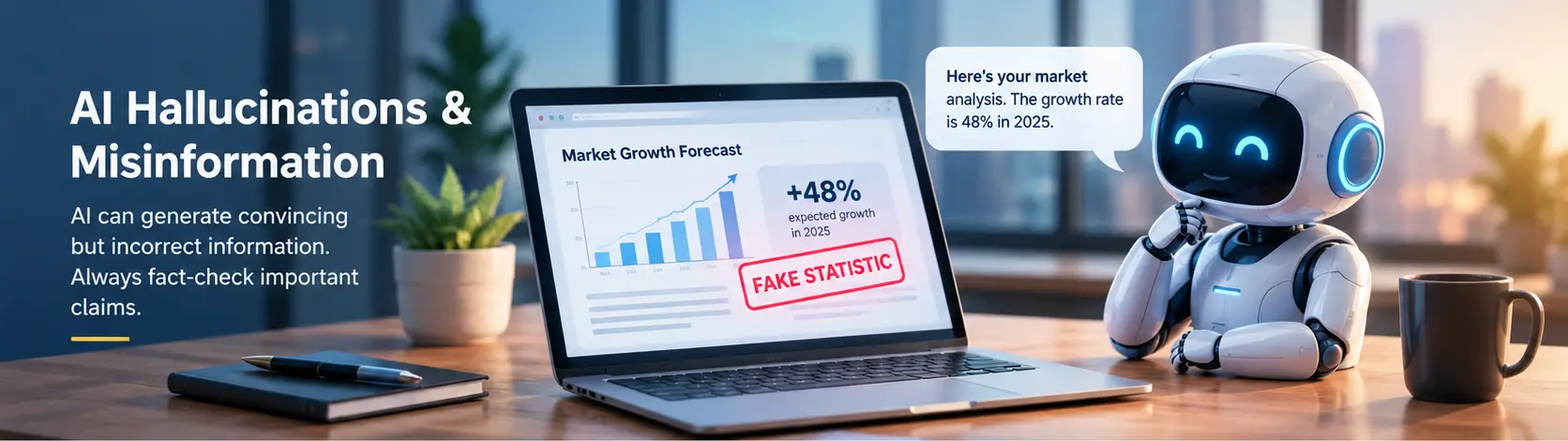 The first lesson in AI hallucinations is that it has that statistic missing. A hallucination occurs when a model generates facts, sources, and numbers and presents them with absolute confidence. Your assistant didn't lie on purpose. It was just a guess of what it would look like if it were a believable statistic.
Later that day, a colleague receives a call that is almost an identical replica of the CEO's voicemail message, instructing them to transfer funds urgently. It's a deepfake. You can create a realistic video of someone, a convincing article, or a cloned voice in seconds, and these deepfakes of executives have already tricked employees into wiring money. The technology is good news for creators, and it is good news for scammers as well.
Cybersecurity Threats and AI-Powered Attacks
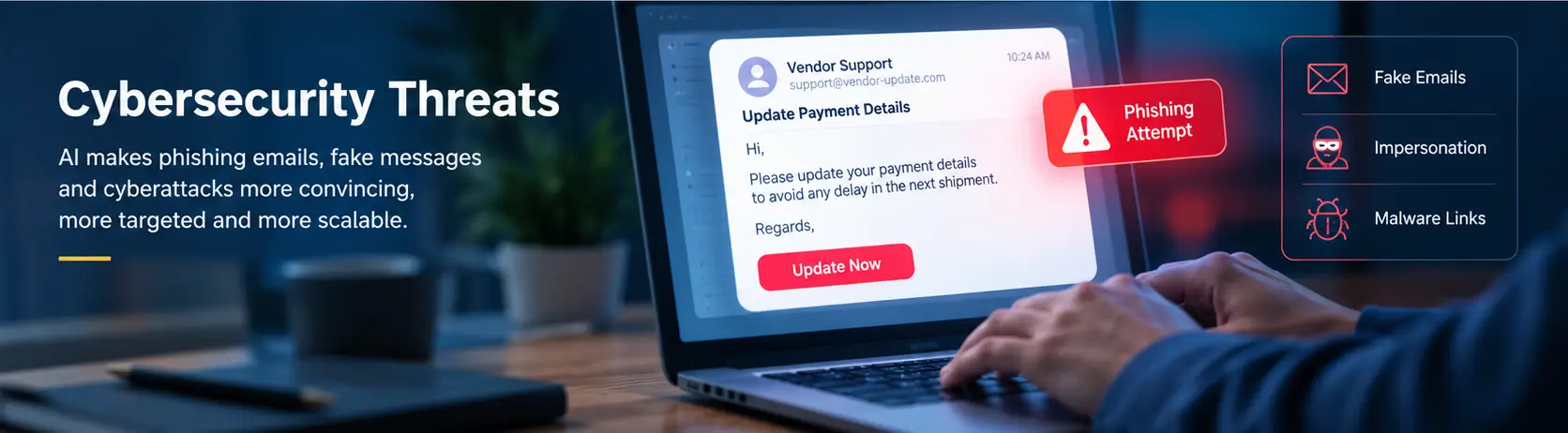 On Tuesday, your finance lead forwards a vendor email that looks perfect. No typos, no awkward phrasing, just a smooth request to "update payment details".
Well, that's the issue. AI is also being used to attack. It can guide them to craft elegant phishing messages, identify vulnerabilities in the email system, and conduct attacks on a larger scale than any individual could. Spotting a scam based on grammar mistakes, as was once recommended, is no longer effective.
Data Privacy and Security Concerns
 Midweek, you discover that an intern pasted a client's contract details into a free public AI tool to "make it sound nicer." Nobody meant any harm. But every prompt you type is data that goes somewhere.
The issues of consent and ownership become more complex when models are trained using scraped data. One of the easily overlooked risks of AI is this invisible one.
Job Displacement and Workplace Automation
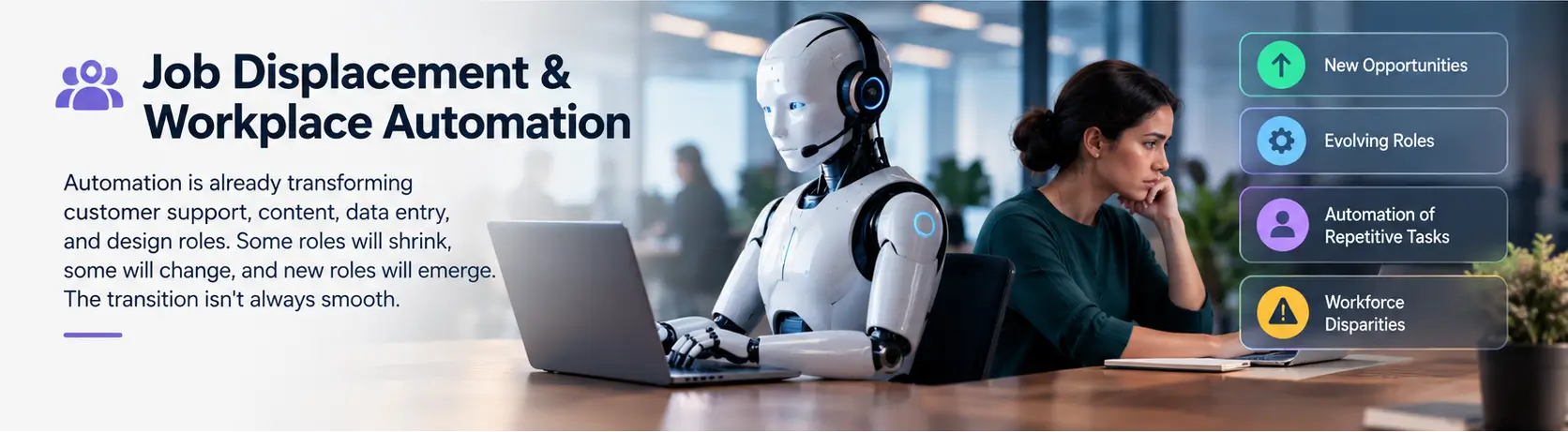 On Thursday, a customer support agent asks you quietly, "Is my job going away?"
It's a fair question. Automation is already transforming customer support, content, data entry, and design roles. Some roles and responsibilities will shrink, some will change, and new roles will emerge. However, the transition isn't always smooth, and one of AI's most discussed negative effects is the disparity in its impact on workers, especially those who lack time to adapt.
Environmental Impact
By Friday, a board member will have sent an article on data centers. It requires massive computing power to train and run large models and requires a massive amount of electricity and water to cool the data center during training. A complex AI query often uses far more energy than a regular web search. As usage explodes, the negative impacts of AI on the environment grow with it.
This doesn't mean you can't use AI. It's crucial to remain vigilant; the risks associated with AI increase significantly in the absence of oversight.
Why AI Outputs Can't Always Be Trusted
Let's go back to that fake statistic, because it's the heart of the story. AI systems can quickly analyse numerous pieces of information and produce believable answers in seconds, but no, that doesn’t mean they are correct. Hallucinations happen because generative AI infers patterns in data; that's why we see hallucinations (errors, new info, misleading explanations). It does not sort out and verify every claim for itself.
That difference is important to businesses. Real decisions can be taken in the wrong direction due to a flawed market analysis, unsupported consumer insight, or a misleading recommendation. It only takes one fabricated number presented to investors to cause significant issues.
As we also discussed on our podcast, AI is 70% accurate, and it always comes with a disclaimer that you should not rely on it entirely. The solution is straightforward (if not always easy). Use AI-generated information as a starting point for investigation and not as absolute truth. Fact-check important claims, verify sources, and apply human judgement.
The Concept of Machine Personality and Bias
Here is one thing you may have noticed that is strange. Your assistant is confident and warm, like a trusted advisor. A colleague's tool sounds formal and analytical. Same questions, different "personalities".
Those personalities are not true beliefs or true experience. They're shaped by training data, system instructions, the design of the model, and human feedback. However, these personalities do impact how information is delivered. A model can be biased toward a specific perspective or point of view, pose a question in a specific manner, and embody assumptions that exist in the data it has been trained on. That can quietly affect recommendations, consumer research, hiring decisions, and business strategy.
Neutral-sounding responses can be biased. Instead of judging an answer's validity by its arguments, check its assumptions, evidence, and limitations first.
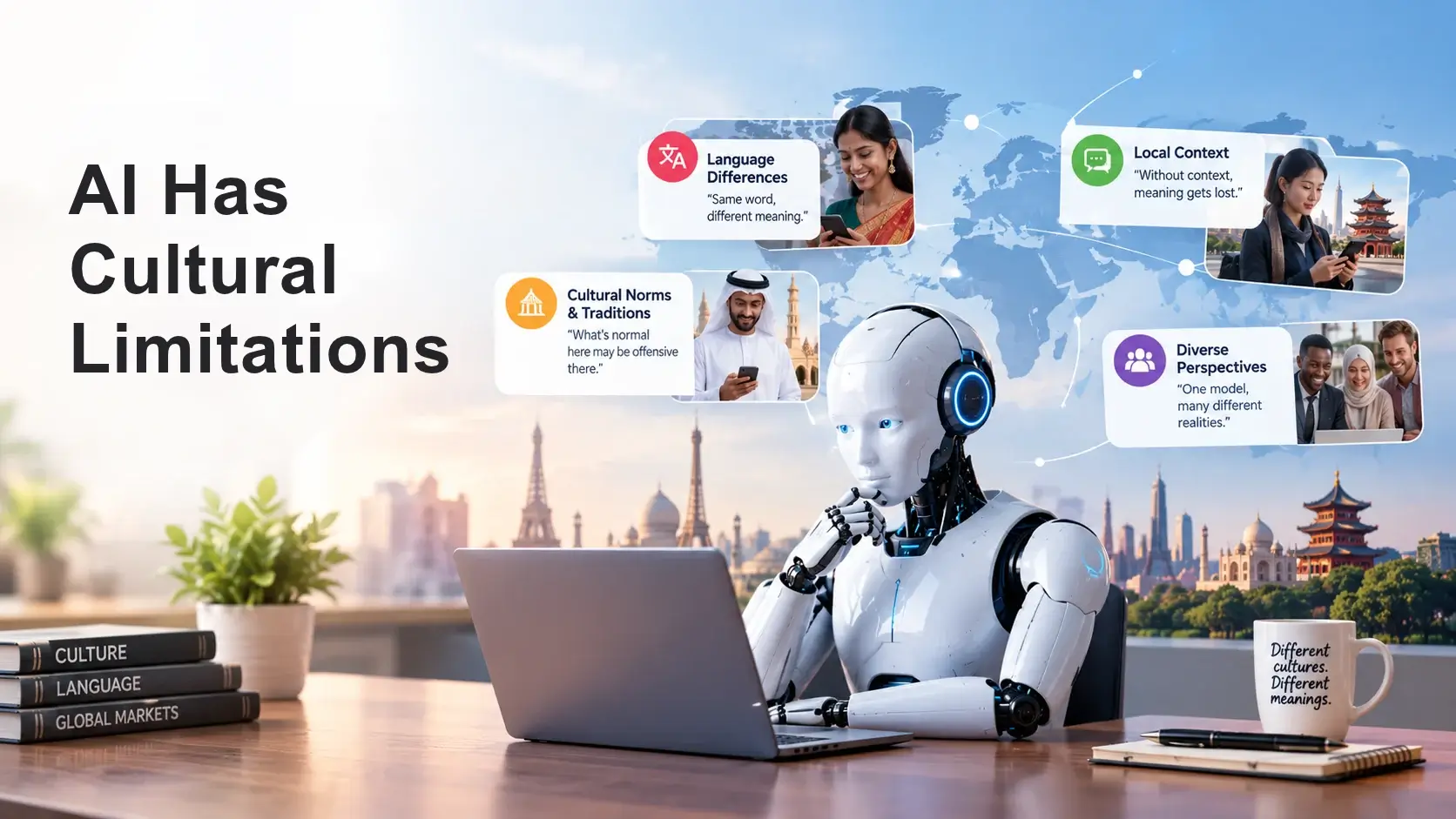
Cultural Limitations of Global AI Models
Now imagine your brand sells across India, and the AI hands you a campaign idea you love. It's built on messaging that works beautifully for Western audiences. In your market, it falls flat.
AI models are used by people in multiple countries, languages, and communities but can be trained with a specific language focus and a particular social and cultural understanding. People respond to products, messages, patterns, and purchases in different ways according to their geographical location. One model may not adequately capture the nuances that differentiate one market from another. What works well with Western consumers might not work with Indian consumers.
On our podcast, Cassiano shared an interesting point that all these LLMs want to try to not use that much tokens. So, they're going to give you the first answer that they get like the fast answer. If you accept that fine but if you're not you need to ask like more questions and you need no go deep and analyze deep to get right answer. Therefore, AI-driven insights should be verified against local expertise and customer experiences. Regional research helps address gaps that might exist in a global model; similarly, diverse perspectives and cultural experiences also prove valuable in this regard.
Synthetic Data vs. Real Human Insights
Next, there's the shortcut. A member of your research team proposes to forego customer interviews and instead rely on AI to create "synthetic personas.
AI-generated data is not all for fake users; it has real applications. You can use it to brainstorm various scenarios, test concepts, create initial audience profiles, and pinpoint questions that need further exploration.
However, it's not the same as human insight. AI personas are based on patterns in the data and do not necessarily represent the lived experiences, emotions, motivations, or contradictions of real customers. They're also often painstakingly predictable and lack some of the ambiguity of real behaviour.
The key is to have a balance: a mixture of synthetic data for initial exploration followed by a mix of interviews, surveys, behavioural data, and direct customer feedback. This combination provides a much more solid basis for decision-making.
How to Use AI Effectively Without Losing Control
By the end of the week, you haven't thrown AI out. You've just taken back the steering wheel.
The goal isn't to hand over decision-making. It's to make human expertise more productive. AI can speed up research, organise information, generate ideas, and identify patterns, while humans provide context, validate findings, and make the final decisions. Here's how to put that into practice:
- Specify clear goals for each AI tool and determine which tasks are suitable for automation.
- Verify outputs against reliable sources, test for bias, and have someone with domain knowledge review the results.
- Set data guidelines for confidential information and customer data and rules on when human approval is required.
- Stay accountable. Technology can strengthen decisions, but it can't replace the responsibility to question assumptions, understand people, and evaluate consequences.
Managing AI risks requires clear guidelines, regular testing, and responsible use of technology. The National Institute of Standards and Technology (NIST) provides an AI Risk Management Framework to help organizations identify, assess, and manage the risks associated with AI systems. When human judgement and AI capabilities work together, you get the benefits of innovation without losing control of the outcome.
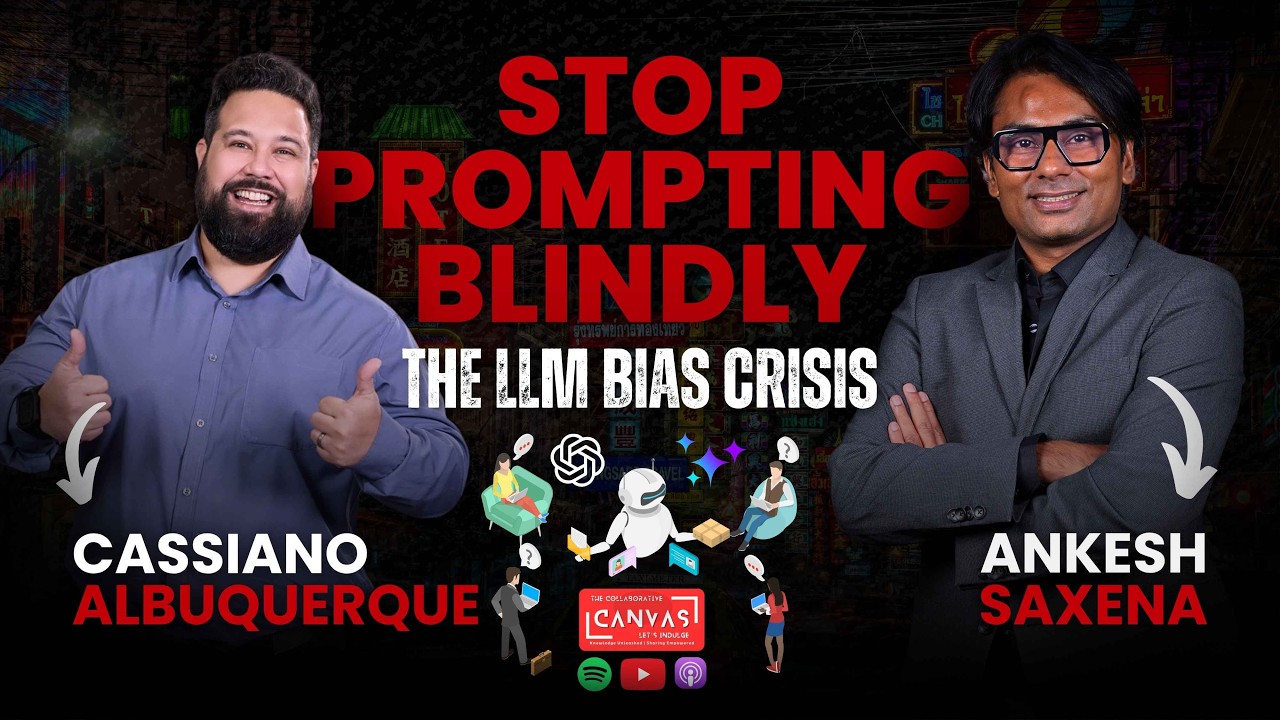
Watch the Full Podcast here:
Conclusion
AI isn't the villain, and it isn't a miracle. It's a powerful tool with real flaws. By understanding the risks of AI, such as AI hallucinations and privacy leaks, you can create more effective policies and prevent costly errors. Keep humans in the loop, stay curious about AI challenges and limitations, and weigh the negative impacts of AI as seriously as the upside. Want more honest conversations on technology, leadership, and innovation? Tune in to The Collaborative Canvas podcast and keep building with confidence.